
Part-Time Driver Insurance: Protect Your Ride
Are you someone who only gets behind the wheel once in a while? Whether you are running errands or working a quick side hustle, your coverage should match your lifestyle. It feels frustrating to pay high monthly premiums when your vehicle sits in the driveway most of the week.
You need a solution that offers both value and financial protection. This post explores how specialized coverage layers keep you safe without breaking your budget. You will learn about tailored benefits and why these modern plans are becoming popular across the United States. Let's look at how you can maximize your savings and secure your vehicle today.
What Is Part-Time Driver Insurance and Do You Need It?
Not everyone drives their vehicle every day, and for those who don't, part-time driver insurance can be a viable and economical choice. If you're an occasional driver, you might be wondering if traditional full-time insurance is the right fit for you.
Defining Part-Time Driving Scenarios
Part-time driving scenarios vary widely among individuals. You might be someone who only drives on weekends or during specific seasons. Understanding your driving habits is crucial in determining whether part-time driver insurance is suitable for you.
1. Occasional Weekend Drivers
If you're an occasional weekend driver, you likely use your vehicle only on Saturdays and Sundays or for leisure activities. In such cases, occasional driver insurance can provide the coverage you need without the hefty premiums associated with full-time insurance.
2. Seasonal Vehicle Use
Some individuals use their vehicles seasonally, such as for summer vacations or winter sports. For these seasonal drivers, part-time driver insurance can offer flexible coverage that aligns with their usage patterns.
Who Benefits Most from Part-Time Coverage
Part-time driver insurance is beneficial for various groups, including students who only drive during breaks, retirees who use their vehicles sporadically, and individuals with alternative primary modes of transportation. If you identify with any of these categories, you might find insurance for part-time drivers to be a cost-effective solution.
Choosing the Right Coverage and Managing Your Costs
As a part-time driver, you're likely looking for insurance that fits your unique needs and budget. With various options available, understanding the types of coverage and what influences your costs is essential to making an informed decision.
Coverage Types for Occasional Drivers
Part-time drivers have various coverage options to choose from, depending on their needs. The key is to understand what each type of coverage offers.
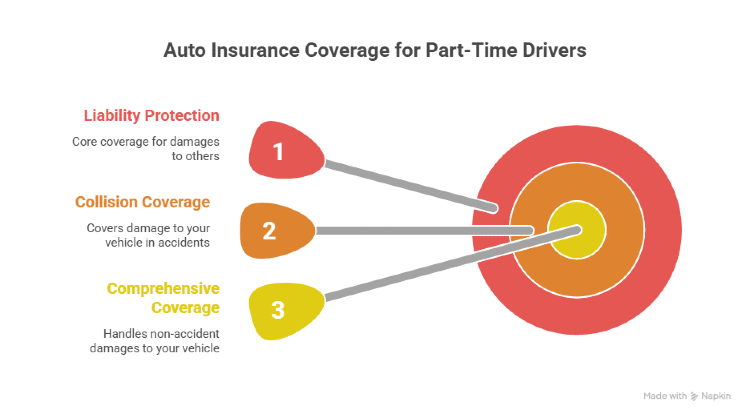
1. Liability Protection
Liability protection is a fundamental component of any auto insurance policy. It covers damages to others in the event of an accident where you're at fault. This includes both bodily injury liability and property damage liability.
- Bodily injury liability helps pay for medical expenses, lost wages, and other related costs for the other party.
- Property damage liability covers repairs or replacement of the other party's vehicle or other damaged property.
2. Comprehensive and Collision Options
In addition to liability protection, comprehensive and collision coverage can provide additional financial security.
- Collision coverage pays for damages to your vehicle if you're involved in an accident, regardless of fault.
- Comprehensive coverage handles damages to your vehicle not caused by an accident, such as theft, vandalism, or natural disasters.
What Influences Your Premium Rates
Several factors can influence your premium rates for part-time driver insurance. Understanding these can help you anticipate and potentially reduce your costs.
- Driving History: A clean driving record can significantly lower your premiums.
- Vehicle Type: The make, model, and year of your vehicle can impact your insurance rates.
- Coverage Limits: Higher coverage limits mean higher premiums.
- Deductible Amount: Choosing a higher deductible can lower your premiums but means you'll pay more out-of-pocket in the event of a claim.
Smart Strategies to Lower Your Insurance Expenses
To manage your insurance costs effectively, consider the following strategies:
- Compare Quotes: Shopping around can help you find the best rates.
- Bundle Policies: Combining your part-time driver insurance with other insurance policies can lead to discounts.
- Maintain a Good Credit Score: In many states, insurance companies can use credit scores to determine premiums.
- Take Advantage of Low-Mileage Discounts: If you drive less frequently, you may qualify for low-mileage discounts.
Choose the Right Coverage for Occasional Driving with Mila
Part-time driver insurance offers various benefits, including lower premiums for less frequent driving. You can select from different coverage types and strategies to manage your costs effectively, making it an attractive option for those who want to save money without compromising on protection.
Before committing to a policy, it is always smart to compare different insurers and coverage options. At Mila we make this process easier by allowing you to compare auto insurance quotes from multiple providers in one place, helping you find a policy that fits both your driving habits and your budget.
Want to find the best coverage for your driving habits? Use Mila to compare auto insurance quotes from multiple providers
Frequently Asked Questions (FAQs) About Part-Time Driver Auto Insurance
Do you really need a specialized policy if you are just an occasional weekend driver?
While a standard policy covers you, it often forces you to pay for risk exposure you don't actually have. If you are an occasional weekend driver, switching to a part-time focused plan through providers like Nationwide can significantly reduce your costs.
These policies recognize that because you spend less time in traffic, your statistical likelihood of an accident is lower, and your rates should reflect that safety.
How does seasonal vehicle use affect your insurance options?
If you own a vehicle that only sees the light of day during specific months, such as a convertible in the summer or a 4x4 in winter, you can use seasonal vehicle-use provisions. You might maintain comprehensive coverage to protect against theft or fire while the car is stored, then "switch on" your liability protection and collision options only when you plan to head back out on the pavement.